How Everyday Walking Supports Spinal Health and Joint Mobility

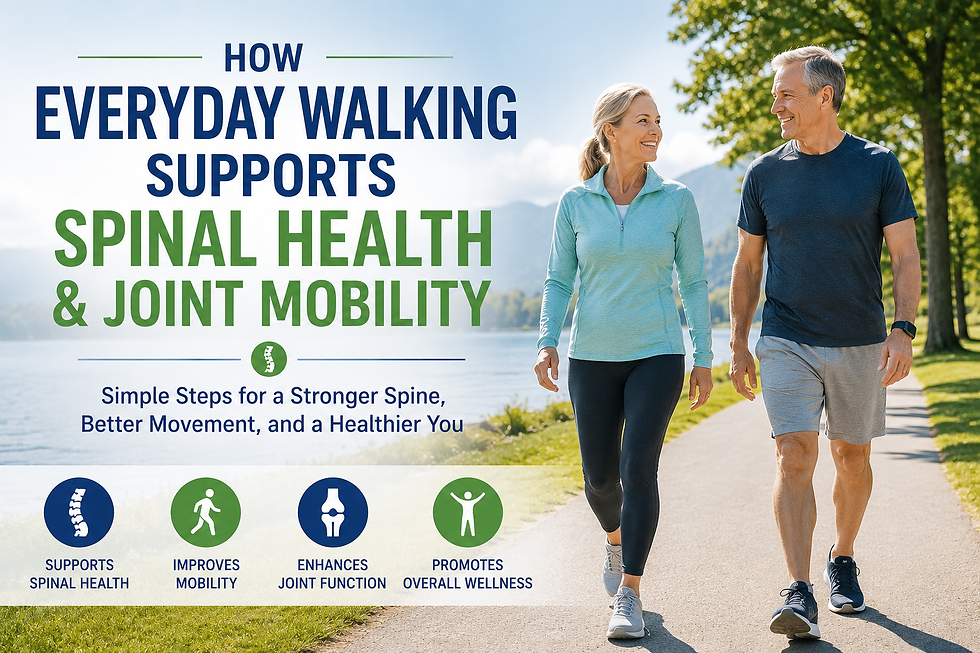
Why One of the Simplest Forms of Exercise Is Also One of the Most Beneficial
Walking is something most people do every day without giving it much thought. Whether you're taking the dog for a walk, exploring one of Salt Lake City's many parks, running errands, or simply moving around the office, walking is one of the most natural forms of human movement.
Despite its simplicity, walking offers remarkable benefits for your spine, joints, muscles, and overall health. Unlike high-impact activities that can place additional stress on the body, walking provides gentle, consistent movement that helps keep the musculoskeletal system functioning efficiently.
For many people, incorporating regular walks into their daily routine is one of the easiest ways to support long-term mobility and spinal wellness.
Your Spine Was Designed to Move
The human spine is built for movement. Each vertebra, joint, ligament, and muscle works together to help you bend, twist, reach, and walk comfortably throughout the day.
When movement becomes limited—whether from prolonged sitting, inactivity, or poor posture—the muscles surrounding the spine can become stiff, and joints may not move as efficiently.
Walking encourages the body to move naturally while promoting flexibility throughout the neck, back, hips, and pelvis.
Rather than remaining in one position for hours, regular walking keeps the entire body engaged.
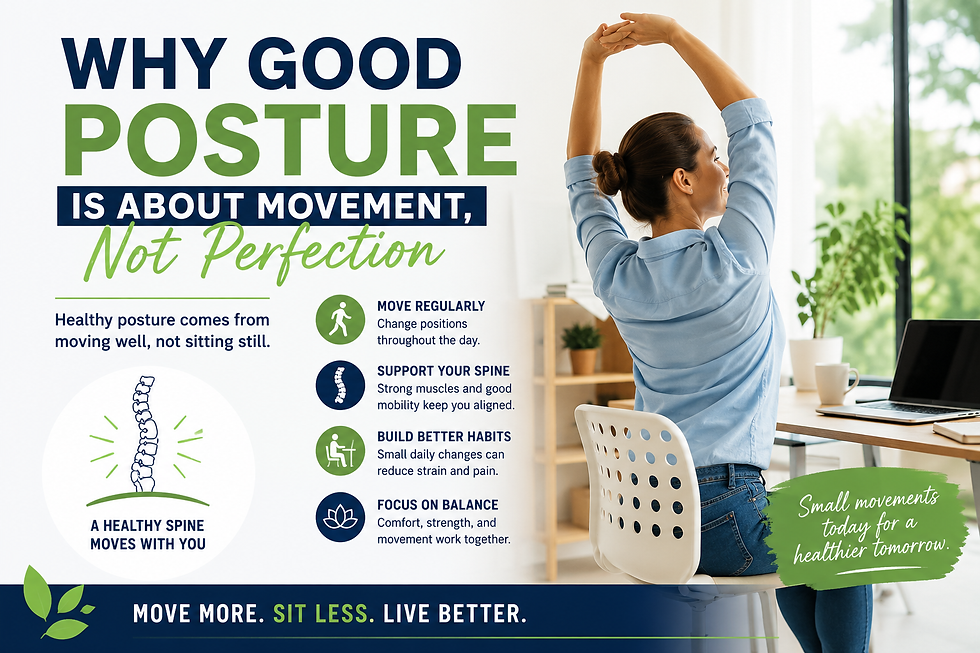
Walking Encourages Better Posture
Good posture isn't something you simply "hold." It's something your body naturally develops through balanced movement and muscle coordination.
When walking with proper posture, several important muscle groups work together:
Core muscles help stabilize the spine.
Hip muscles support pelvic alignment.
Upper back muscles encourage an upright posture.
Leg muscles absorb impact efficiently.
Shoulder muscles help maintain natural arm swing.
These coordinated movements help distribute forces more evenly throughout the body.
Supporting Healthy Joint Mobility
Every step you take gently moves numerous joints throughout the body.
Walking helps maintain motion in the:
Ankles
Knees
Hips
Pelvis
Spine
Shoulders
Regular movement helps nourish joint tissues by encouraging the circulation of synovial fluid, which supports smooth joint function.
While walking isn't a treatment for joint conditions, maintaining regular movement is widely recognized as an important part of supporting joint health.
Walking May Help Reduce Everyday Stiffness
Many people notice stiffness after sitting for long periods.
Whether you spend the day working at a computer, driving, or relaxing at home, remaining in one position for extended periods can make the body feel tight.
Even a short walk can help encourage circulation and loosen muscles that have been inactive.
This is one reason healthcare professionals often recommend standing up and moving periodically throughout the day.
The Connection Between Walking and Chiropractic Care
Walking supports many of the same goals emphasized in chiropractic care: healthy movement, good posture, joint mobility, and overall musculoskeletal function.
People often seek chiropractic care for concerns such as neck pain, back pain, or reduced mobility. Depending on an individual's needs, a chiropractor may also provide guidance on posture, stretching, strengthening exercises, and healthy movement habits that complement an active lifestyle.
Walking and chiropractic care can work together as part of a broader approach to supporting long-term spinal health.
Walking is an excellent way to stay active, but persistent pain or limited mobility shouldn't be ignored. If you'd like to learn more about the clinic's approach to musculoskeletal care, visit spinal care in Salt Lake City for healthy movement and long-term mobility to see how spinal health and movement are evaluated and supported.
Walking Supports Core Stability
Many people think of the core as only the abdominal muscles.
In reality, the core includes numerous muscles that stabilize the spine and pelvis during movement.
Walking gently activates these muscles with every step, helping improve coordination and endurance over time.
A stronger, more coordinated core can contribute to better posture and more efficient movement during everyday activities.
Walking Is Gentle on the Body
Unlike some forms of high-impact exercise, walking is accessible to people of many ages and fitness levels.
Benefits include:
Minimal equipment required
Low impact on joints
Easy to adjust pace and distance
Can be done almost anywhere
Supports cardiovascular health
Encourages healthy movement habits
Because it's easy to incorporate into daily life, walking often becomes one of the most sustainable forms of exercise.
Small Daily Walks Add Up
You don't have to walk several miles to experience benefits.
Many people find success by adding movement throughout the day:
Taking a morning walk
Walking during lunch breaks
Parking farther away
Taking the stairs
Walking after dinner
Exploring local parks and neighborhoods
Consistency often matters more than distance.
When to Seek Professional Evaluation
Although walking is appropriate for many people, persistent pain while walking, numbness, weakness, or significant changes in mobility should be evaluated by a qualified healthcare professional.
Similarly, recurring neck pain, back pain, or joint discomfort that limits daily activities deserves a proper assessment to determine the underlying cause.
Early evaluation may help identify issues before they interfere with long-term mobility.
If ongoing back or neck discomfort is making it difficult to enjoy daily walks or other activities, you can learn more about chiropractic care in Salt Lake City for spinal health and everyday mobility and when it may be appropriate to seek an evaluation.
Final Thoughts
Walking remains one of the simplest and most effective ways to support spinal health, joint mobility, and overall well-being. Combined with good posture, regular stretching, strength training, and healthy lifestyle habits, it can become an important part of maintaining an active lifestyle.
For individuals experiencing ongoing musculoskeletal discomfort or reduced mobility, consulting a qualified healthcare professional can help determine the most appropriate approach based on their individual needs.


Comments