Why Good Posture Is About Movement, Not Perfection

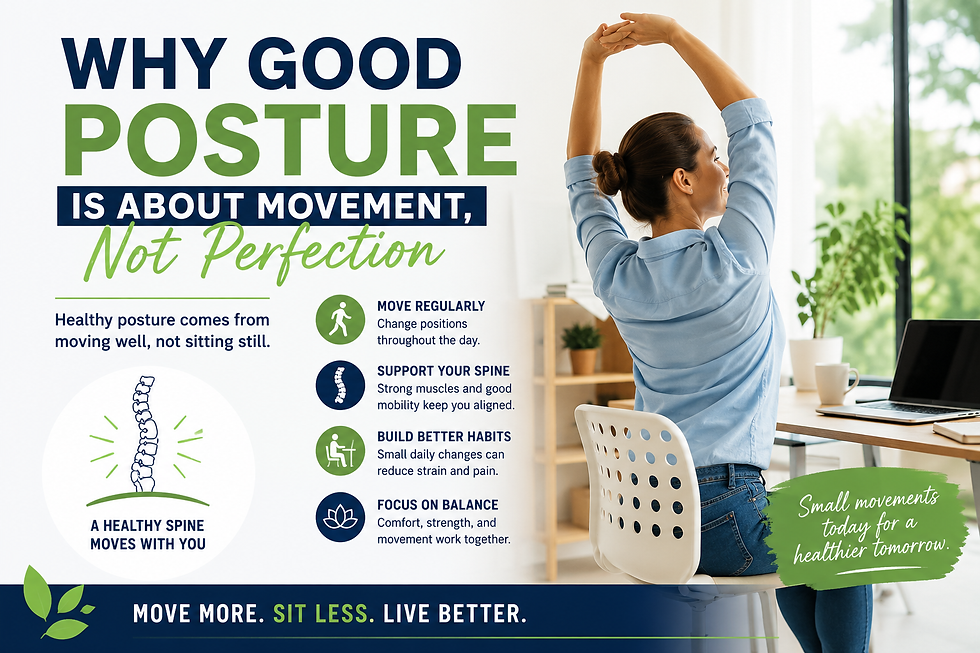
Rethinking What Good Posture Really Means
For decades, people have been told to "sit up straight" and "stop slouching." While good posture certainly plays an important role in musculoskeletal health, many people misunderstand what healthy posture actually looks like.
The truth is that there isn't one perfect posture that you should maintain all day. In fact, remaining in any single position for hours—even one considered "good"—can eventually lead to stiffness and discomfort.
Instead, healthy posture is dynamic. It involves keeping your body moving, changing positions regularly, and maintaining balance between your muscles and joints. By combining regular movement with proper body mechanics, you can help support spinal health and reduce unnecessary stress on your neck, back, and shoulders.
Your Spine Is Built for Movement
The spine is an incredibly adaptable structure made up of vertebrae, discs, muscles, ligaments, and joints that work together to allow movement in multiple directions.
Throughout the day your spine bends, twists, rotates, and supports your body during nearly every activity.
Movement helps:
Support joint mobility
Keep muscles engaged
Encourage flexibility
Promote healthy circulation
Reduce prolonged muscle tension
When movement becomes limited for extended periods, many people begin noticing stiffness and decreased comfort.
The Myth of Perfect Posture
Many people imagine perfect posture as sitting completely upright with their shoulders pulled back and their chest pushed forward.
Holding this rigid position all day can actually become tiring because muscles remain under constant tension.
Rather than striving for perfection, think of posture as maintaining comfortable alignment while allowing your body to move naturally throughout the day.
The best posture is often your next posture.
Why Sitting for Long Periods Can Be Challenging
Modern lifestyles often involve hours of sitting while:
Working at a computer
Driving
Watching television
Attending meetings
Studying
Using a smartphone
Remaining seated for prolonged periods may contribute to:
Neck stiffness
Tight shoulders
Mid-back discomfort
Hip tightness
Reduced spinal mobility
Simple movement breaks throughout the day can help interrupt these prolonged static positions.
Good Posture Starts With Body Awareness
Many people don't realize when their posture begins to change.
Simple habits can help improve awareness:
Keep your ears roughly aligned over your shoulders.
Relax your shoulders instead of shrugging them.
Avoid leaning toward your screen.
Keep both feet supported while sitting.
Alternate positions regularly.
Small adjustments made consistently often have a greater impact than trying to maintain one rigid position.
Strong Muscles Help Support Better Posture
Posture depends on more than simply remembering to sit correctly.
Several muscle groups work together to support your spine, including:
Core muscles
Upper back muscles
Hip stabilizers
Gluteal muscles
Shoulder muscles
Regular strength training and mobility exercises help these muscles work more efficiently during everyday activities.
Chiropractic Care and Postural Health
Many people seek chiropractic care because recurring neck pain, back discomfort, or stiffness begins interfering with everyday activities.
During an evaluation, a chiropractor may assess posture, spinal mobility, joint function, muscle balance, and movement patterns to better understand what may be contributing to musculoskeletal discomfort.
Depending on an individual's needs, chiropractic care may also include recommendations for stretching, strengthening exercises, workstation ergonomics, and healthy movement habits that complement spinal care.
Many posture-related concerns develop gradually through everyday habits, making early attention to movement and ergonomics worthwhile. To learn more about the clinic's approach, visit the Spinal Care Chiropractors in Salt Lake City page for information about evaluation and conservative musculoskeletal care.
Movement Breaks Matter
One of the simplest ways to support healthy posture is to move frequently.
Consider:
Standing every 30–60 minutes
Walking during phone calls
Stretching between meetings
Changing sitting positions
Rolling your shoulders periodically
Taking short walks throughout the day
These brief movement breaks help reduce the effects of prolonged sitting.
Everyday Habits Influence Posture
Posture is affected by more than your office chair.
Daily activities such as carrying groceries, lifting children, exercising, gardening, driving, and sleeping all influence how your body moves.
Choosing supportive footwear, lifting properly, maintaining physical activity, and sleeping in a comfortable position all contribute to long-term spinal health.
When Professional Evaluation May Be Helpful
Occasional stiffness is common after a long day, but persistent symptoms deserve attention.
Consider seeking professional evaluation if you experience:
Ongoing neck pain
Frequent headaches
Persistent back discomfort
Reduced range of motion
Numbness or tingling
Symptoms that interfere with daily activities
An individualized assessment can help identify contributing factors and guide an appropriate treatment plan.
Final Thoughts
Healthy posture isn't about forcing yourself into one perfect position. It's about moving regularly, maintaining muscle balance, and developing daily habits that support comfortable movement.
By combining regular activity, strength, flexibility, ergonomic awareness, and mindful movement, you can help support your spine for years to come.
Whether you're working at a desk, enjoying outdoor recreation around Salt Lake City, or simply moving through everyday life, your spine benefits most when you keep it moving.
If persistent neck or back discomfort is making it difficult to maintain healthy posture or stay active, you can learn more about the services available at Chiropractors in Salt Lake City Utah and when it may be appropriate to seek a professional evaluation.



Comments